.png?width=133&height=43&name=Logo%20(4).png "Logo (8)")
April 2026 Chicago, IL: Anark sponsored the MBE & QIF Summit 2026 that brought together an array of experts that continue advancing the development of open standards to enable the seamless exchange of Model-Based Definitions and manufacturing quality data.
We had a great week supporting this annual assembly of industry experts with our long time model-based efforts and support of all the technical data delivery methods our customers need that span standards, MBD Native access, PLM Automation, Secure content management, Digital Engineering portals and more based on 3D PDF and HTML standalone or hosted Technical Data Packages. For a great summary of the recent work Anark has been doing, see the blog: The Need for Machine-Readable, Machine-Interpretable, and Human-Readable Data in Digital Engineering Collaboration.
Collaboration from Design to Manufacturing, Inspection and back.
We talk a lot about the “digital thread” in manufacturing—but what does it actually look like when it’s real? Anark was part of a Hackathon at the event moved beyond theory and put it into action.
This team was led by Ben Kassel from the University of Maryland Applied Research Lab for Intelligence & Security (ARLIS). Other participants included Connecticut Center for Advanced Technology (CCAT), Auburn University and High QA.
The workflow we were able to provide included:
• CCAT and Auburn University drove manufacturing and supplier execution
• HighQA enabled quality planning and technical data management
• Anark delivered a Digital Technical Data Package and collaboration backbone
The result was a fully connected process where:
• Early design challenges were worked out through more effective collaboration using STEP, QIF and Content Centric Collaboration.
• Inspection plans were generated directly from the MBD standards
• Measurement (CMM / 3D scanning) fed results into a digital thread
• First Article Inspection was created in real time
• Suppliers executed, identified nonconformances, and closed the loop digitally
This was more than a concept and was a working example of how accessible, actionable technical data, based on standards, can reduce errors, minimize rework, and improve delivery confidence across the supply chain.
The team members are putting together a video of this presentation stay tuned or reach out to any of the members for more questions.
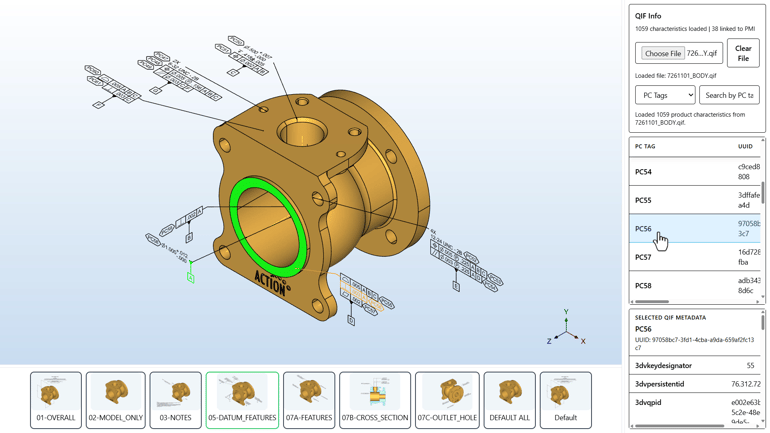
Figure 1 - HTML Technical Data Package with sync of STEP to QIF via PIDs
For any additional questions, please Contact Anark.
Related Resources:
Blog: How Model Based Enterprise Transforms Product Lifecycle Management
eBook: How to Leverage Model-Based Engineering Data Across Your Supply Chain
About the event:
MBE Summit
The MBE Summit has brought academia, government, and industry experts together since 2009 to share the challenges, implementation issues, and lessons learned in design, manufacturing, quality assurance, and sustainment of products and processes where a Model-Based approach is used. This includes all aspects of the product lifecycle from design, manufacturing, quality assurance, and sustainment of products, where a digital 3D model acts as the authoritative source of information.
QIF Summit
DMSC have been gathering those people and organizations interested in developing an open standard to facilitate the seamless movement of a model-based definition and manufacturing quality data. Quality of Information Framework 3.0 is a structured way to achieve that objective. Everyone interested in the standard and those who want to help improve and expand it will have the opportunity to do so at the summit.

